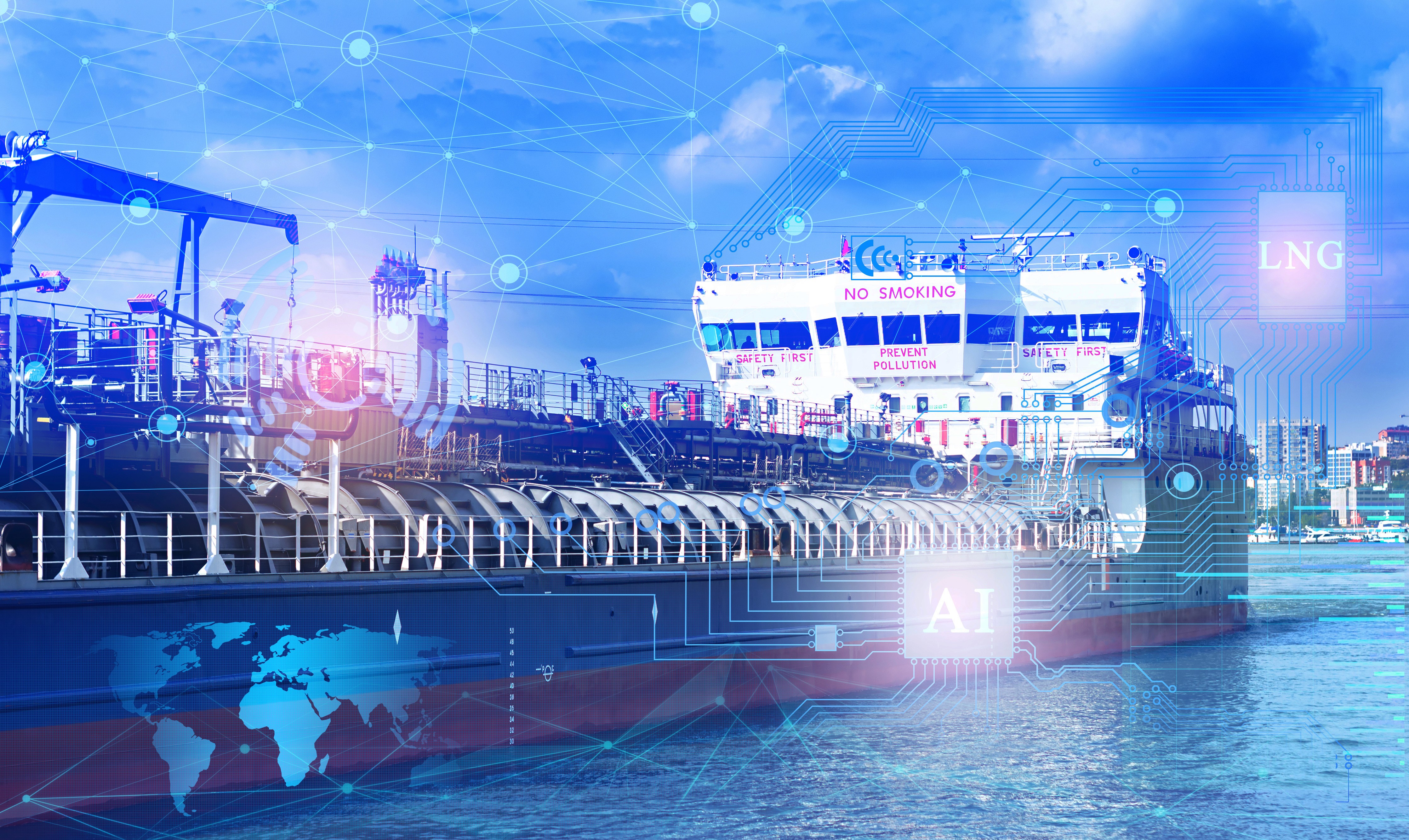
Artificial intelligence (AI) is reshaping the energy and maritime sectors, but while many companies are investing in AI, far fewer are truly AI-ready. Here’s what that means.
AI is rapidly reshaping the LNG sector, from liquefaction and storage to shipping, fleet management, and end‑to-end cargo delivery. As markets become more dynamic and schedules more complex, LNG operators need more than experimental AI-enabled tools: they need to be AI‑ready.
Being AI‑ready means having the strategy, data, technology, and culture to deploy AI responsibly and at scale, and turn insight into action and profit.
1. Strategic alignment: connecting AI to real LNG cargo priorities
AI‑readiness begins with tying AI initiatives to operational and commercial priorities.
LNG producers face major operational challenges including volatile market conditions, extreme weather events, varying feed quality, and difficulty aligning production with cargo scheduling (among others). Sustainability pressures and regulatory expectations are also rising, making emissions reduction and fuel efficiency a top priority for operators.
Strategic alignment in LNG freight and cargo operations means:
Optimising cargo scheduling and reducing demurrage.
Enhancing vessel fuel efficiency and emissions compliance.
Aligning liquefaction output with fleet deployment.
Using AI insights to guide BOG management, voyage planning, and fleet rotation.
When AI tools effectively support these strategic goals, they deliver far more than operational efficiency – they strengthen commercial performance and long‑term resilience.
2. Data foundations: turning raw operational data into actionable cargo intelligence
AI is only as good as the data behind it. LNG operators often under‑use available data and struggle to integrate operational and scheduling datasets, limiting decision‑making for cargo readiness, ETAs, and fleet planning.
Where strong data foundations exist, machine learning (a subset of AI that focuses specifically on learning from data) can deliver far more meaningful results: studies cite up to 30% reductions in unplanned downtime and ~20% gains in inventory forecasting accuracy in an LNG context. With high quality data foundations in place, AI can predict BOG levels, optimise fuel usage, and inform real-time cargo and vessel management decisions.
3. Technology and infrastructure: building a smart, connected technology ecosystem
AI‑readiness requires more than analytics tools – real‑time collaboration and end‑to‑end visibility across the LNG cargo and freight ecosystem require systems to be interoperable.
For LNG cargo and freight operations, a significant barrier to operational efficiency is the fragmented, siloed flow of information between producers, vessel operators, schedulers, and terminal operators. Without the right digital tools in place, LNG operators struggle with linking production data to expected cargo scheduling and integrating operational data streams – a challenge that directly impacts vessel arrival planning, boil‑off management windows, and freight program planning.
Technology priorities for LNG operators include:
Secure data exchange between sellers, buyers, shipping desks, fleet ops, and terminals.
Cloud architecture to support real‑time insights.
Integration pathways for ML models, optimisation, and document sharing.
Auditability and traceability to support safety and regulatory requirements.
4. Culture and skills: empower people, do not replace them
AI‑readiness also depends heavily on people. While AI and ML systems are powerful, over‑reliance can erode essential operational expertise and reduce human oversight, a risk the LNG industry cannot afford given its safety‑critical context.
Complicating matters, 40% of energy CIOs cite a lack of AI‑skilled talent as the biggest barrier to adoption, underscoring the need for long‑term workforce training.
To be AI‑ready, LNG teams need to:
Understand how to interpret and validate AI recommendations.
Maintain strong operational and commercial literacy.
Actively participate in improving data quality.
Use AI to augment, not replace, informed human judgment.
When balanced, the human plus machine model supports safer, smarter, more confident LNG cargo and freight decision‑making.
What AI‑ready LNG cargo operations look like
When these four pillars align, operators unlock:
Better visibility over cargo readiness and tighter scheduling.
Optimised routing and fuel consumption; and lower emissions.
More accurate BOG forecasting and voyage stability.
Higher vessel uptime via predictive insights.
Smoother coordination across global counterparties.
AI‑readiness is not theoretical; it is a practical path to measurable advantages across the LNG freight lifecycle.
Turning AI‑readiness into real operational impact
AI‑readiness in LNG operations starts with the ability to capture, structure, and share accurate cargo and freight data.
Platforms such as GLX CARGO are designed to provide these digital foundations, replacing fragmented communication with reliable, audit-ready workflows that give LNG cargo and freight teams the data quality and visibility needed to support advanced AI tools.
In our follow up article, How GLX CARGO Helps LNG Companies Build an AI‑Ready Future, we explore how these principles translate into day-to-day operational execution.